Exhaust Metallurgy: 304 vs Titanium vs Inconel
The difference between a $400 exhaust and a $1,400 exhaust is usually three things: the metal, the welds, and the design. This guide covers the metal — so you can read a supplier spec sheet like an engineer and ask the questions that expose a bad deal.
Stainless steel — 304, 316, 409, 201, and 321
Not all "stainless" is stainless. Here's the lineup:
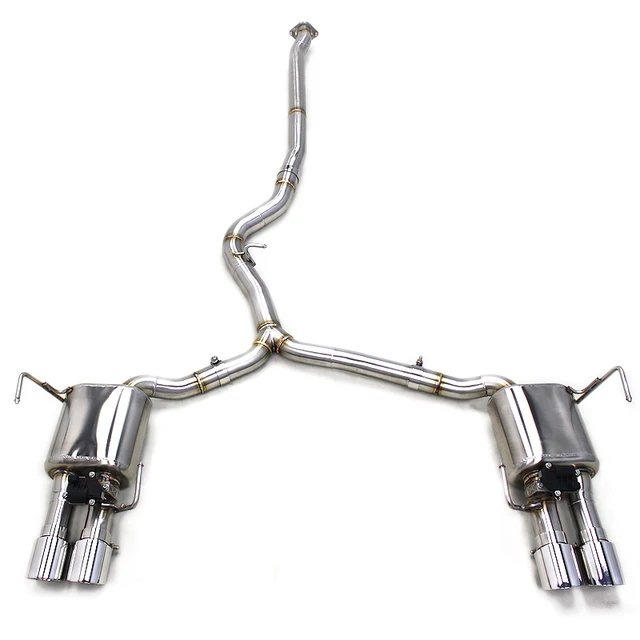
- 304 — the industry standard. 18% chromium, 8% nickel. Corrosion-resistant, welds well, sounds right. The minimum acceptable grade for any performance exhaust worth selling. If a supplier won't confirm 304 in writing, you're done.
- 316 — marine grade. Adds molybdenum for extreme corrosion resistance. Better than 304 on paper, overkill for most exhausts — but premium if offered at a sane price.
- 409 — the budget grade. Cheaper, and it WILL develop surface rust. Fine for an OEM replacement on a budget car. Never sell it as a premium system.
- 201 — the bait-and-switch grade. The lowest tier. Rusts fast. This is what shows up when a supplier quotes 304 and ships something cheaper. Your contract should name 304 explicitly.
- 321 — the turbo-manifold answer. Standard 304 can suffer weld-zone cracking at sustained turbo-manifold temperatures. 321 adds titanium, which grabs the carbon first and leaves the chromium free to protect the metal. For turbo manifolds and high-heat exhaust sections, 321 is the engineering-correct grade — 304 is acceptable, 321 is right.
Titanium — grades, myths, and the questions that matter
Titanium exhausts are where the most money gets made — and the most nonsense gets sold.
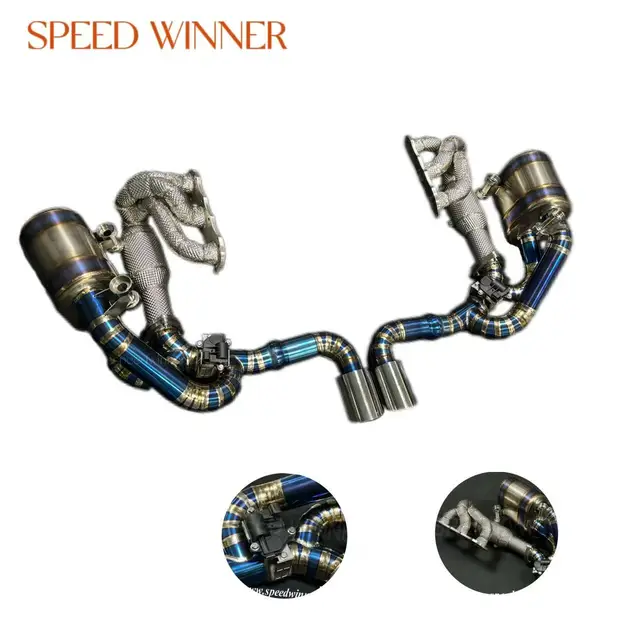
Grade 2 is the honest standard. Most real aftermarket titanium exhausts are commercially pure titanium — Grade 1 or Grade 2. Good balance of formability, weldability, corrosion resistance, and cost. (Grade 1: tensile ~240 MPa minimum, excellent formability — confirmed against ASTM B265 datasheets.)
Grade 5 (Ti-6Al-4V) is the alloy everyone names — roughly twice the strength of Grade 2 (yield ~880 MPa / 128 ksi), but harder to form and weld into tubing. It shows up in fasteners and high-stress hardware far more than in full exhaust systems. Rule of thumb: a "full Grade 5 titanium exhaust" at a bargain price is a red flag.
Why titanium exhausts crack (the honest version): thin walls — 30–40% thinner than steel equivalents — plus high notch sensitivity. A rock nick propagates into a crack faster than steel. Every weld needs back-purging (inert gas inside AND outside) or it embrittles, and most local shops can't do it properly. Thin walls also mean more resonance — the exotic sound comes with drone.
Inconel — 625 vs 718
When a listing says "Inconel exhaust" with no grade, that's a marketing word, not a spec. Two grades matter:
- 625 is the exhaust alloy. Nickel-chromium superalloy, service up to ~982°C (1800°F), tensile ~827 MPa. Handles extreme exhaust temperatures without degrading, welds well, no post-weld heat treatment needed. This is what high-end Inconel exhausts are made from.
- 718 is NOT the exhaust alloy. Stronger on paper (~1375 MPa tensile), but its strength falls off above ~650–700°C — and it's built for turbine blades and aerospace hardware, not exhaust gas. Harder to weld properly than 625.
Turbocharger basics — read the spec sheet
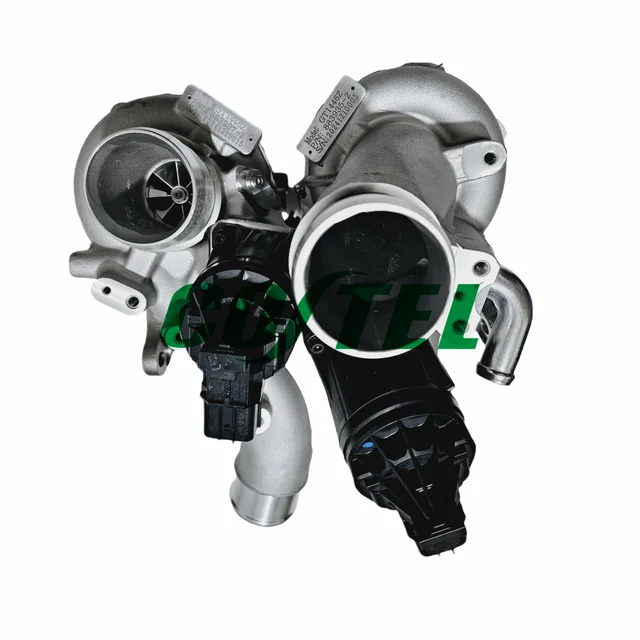
- Hybrid turbos: OEM housings machined to accept larger compressor and turbine wheels. Keeps factory bolt-on fitment while flowing more air. The sweet spot for street builds.
- Compressor wheel sizing: inducer (air inlet diameter) and exducer (base diameter). Bigger inducer = more max power. Bigger exducer = higher boost pressure. 11-blade spools faster with lower peak flow; 9-blade is slower to spool with higher top-end.
- Turbine housing A/R: smaller A/R spools faster but chokes at high RPM; larger A/R breathes better up top. Twin-scroll separates exhaust pulses for faster spool versus single-scroll.
- Wastegates: electronic (EWG) vs pneumatic (PWG) — a FITMENT item. A 2011 135i with the PWG N55 takes a different turbo than the EWG version. Always confirm which one before quoting.
- Connections: T3, T4, or V-band (flangeless clamp — the preferred high-end choice).
Supplier scripts — copy, paste, send
Stainless grade lock-in:
"Confirming the exhaust system is full T304 stainless — not 409, not 201. Please confirm the exact grade in writing before we proceed. If any section uses a different grade, list which sections and which grades."
Titanium grade check:
"You list this as a titanium exhaust — which grade? Grade 2 or Grade 5? Please confirm in writing, and confirm the wall thickness."
Turbo manifold grade:
"Is the manifold 304 or 321 stainless? 321 is our spec for the hot side — please confirm."
Inconel check:
"You list Inconel — which grade, 625 or 718? Please confirm in writing."
Turbo fitment:
"Confirming fitment: [year] [make] [model], engine [N55/B58/etc.], wastegate type [PWG/EWG]. Is this a direct bolt-on for the factory manifold?"
Red flags
- "Titanium" with no grade. See above.
- "Inconel" with no grade. See above.
- "Stainless steel" with no number. 201 ships when 304 was quoted. Name it.
- Grade confirmed verbally but not in the Alibaba chat. If it's not written, it didn't happen.
- "Grade 5 full titanium exhaust" at a bargain price. Physics has a price. Verify before you repeat the claim.