Big brake kits direct from the factory: real costs & safety guide
A brand-name 6-piston big brake kit runs $4,000–$8,000. The calipers, rotors, and brackets in many of those kits come from the same factories you can buy from directly — $600–$1,100 for a 6-piston kit with 2-piece rotors. Here's the real pricing — and the safety rules that are non-negotiable.
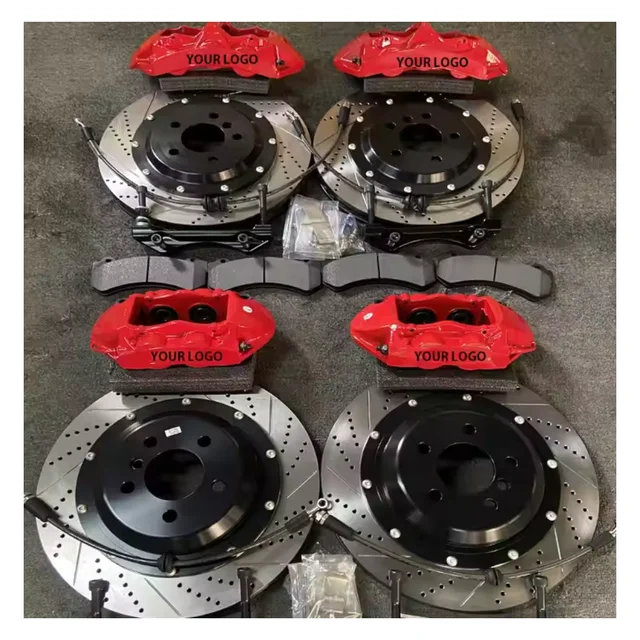
What big brake kits really cost direct
| Kit | Factory-direct | Brand retail |
|---|---|---|
| 4-piston + rotors | ~$400–$700 | $2,500–$4,000 |
| 6-piston + 2-piece rotors | ~$600–$1,100 | $4,000–$8,000 |
| 8-piston + 2-piece rotors | ~$800–$1,500 | $6,000–$12,000 |
What actually determines braking performance
Piston count is the marketing number. These are the engineering numbers:
- Rotor diameter — more leverage = more torque. The biggest single upgrade.
- Pad compound — street, sport, or track compound matters more than piston count.
- Caliper stiffness — forged monoblock > two-piece bolted > cast.
- Hydraulic balance — the kit must match your master cylinder or the pedal goes soft.
Rotor types
| Type | Best for |
|---|---|
| Blank | Plain face; quiet and strong — the usual OEM choice. |
| Slotted | Slots help clear pad gas and debris; common for spirited driving. |
| Drilled | Mostly for looks and some cooling; cheap drilled rotors can crack under hard track use. |
| Two-piece / floating | Iron ring on an aluminum hat; lighter, and the ring can be replaced on its own. |
Pad compounds
| Compound | Typical use |
|---|---|
| Ceramic | Street; low dust, quiet. |
| Semi-metallic | Street/performance; more bite, more dust. |
| Race compounds | Track only; often need heat to work and grip poorly when cold. |
Do you even need a big brake kit?
Only if your use needs it — track days, towing, big power. For most street cars, quality pads, rotors and fresh fluid are enough. Don't buy pistons for looks and call it performance. Our brake rotors & pads guide covers the upgrade path that makes sense for daily drivers.
Safety checks before ordering rotors and pads
The same verification discipline applies to consumables. Before ordering rotors and pads direct: ask for the rotor material and heat-treatment details; ask about certifications such as ECE R90 (the common European standard for replacement brake parts); match rotor diameter and thickness to your calipers exactly; and have a qualified mechanic install and bed them in. One rule from the factory floor: if a supplier cannot tell you the material, compound, or certification, do not put those parts on a car that carries people.
How to buy a brake kit direct (safely)
- Confirm chassis-specific engineering — bracket, rotor offset, and wheel clearance for your exact car. Ask for the wheel-clearance template.
- Request test documentation — pressure testing, material certs. Real brake factories have them.
- Check what's included — lines, pads, brackets, hardware. "Kit" should mean complete.
- Professional install + proper bed-in — then re-torque and inspect after 100 miles.
FAQ
How much does a big brake kit cost direct from the factory?
Factory-direct: 4-piston kits $400–$700 (vs $2,500–$4,000 branded), 6-piston kits with 2-piece rotors $600–$1,100 (vs $4,000–$8,000), 8-piston kits $800–$1,500 (vs $6,000–$12,000).
Is it safe to buy brake parts direct from the factory?
Only if you verify. Buy only from a manufacturer that provides material certs and pressure-test documentation, have the kit professionally installed, bed the pads in properly, and inspect after the first heat cycles. If a supplier can't produce test docs, walk away.
What actually determines braking performance?
Rotor diameter is the biggest single upgrade, followed by pad compound, caliper stiffness (forged monoblock beats two-piece bolted beats cast), and hydraulic balance with your master cylinder.
Are drilled rotors better than slotted?
Not necessarily. Slotted or blank rotors are usually preferred for hard use, and low-quality drilled rotors can crack under hard track use.
Do I need a big brake kit for a street car?
Only if your use needs it — track days, towing, big power. For most street cars, quality pads, rotors and fresh fluid are enough.