Coilovers & suspension direct from the factory
Brand-name coilovers run $1,500–$5,000 a set. Many of those dampers are built in the same factories that sell direct — $250–$900 for a quality set. This guide covers the real pricing, what the construction types mean, and how to buy a set that actually rides right.
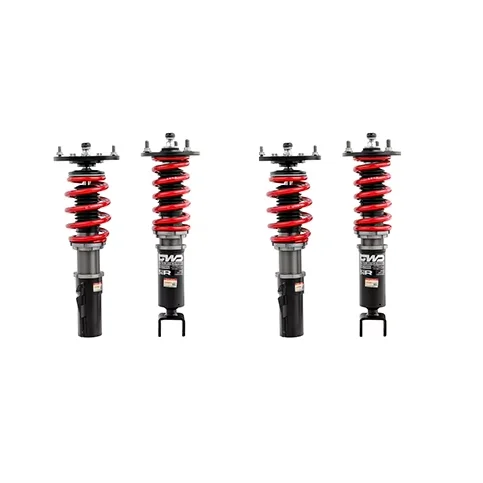
What coilovers really cost direct
| Type | Factory-direct (set) | Brand retail |
|---|---|---|
| Twin-tube street kit | ~$250–$450 | $1,000–$1,800 |
| Monotube adjustable | ~$400–$900 | $1,800–$3,500 |
| Air suspension kit | ~$800–$2,000 | $3,500–$8,000 |
Monotube vs twin-tube vs air
- Twin-tube — cheaper, softer ride, fine for street and stance builds.
- Monotube — single tube, floating piston. Better heat handling, consistent damping. What you want for spirited driving or track.
- Remote reservoir — extra oil capacity for sustained track abuse.
- Air — adjustable height on demand; quality depends heavily on the management system.
Control arms: fixing alignment after lowering
Lowered cars often need adjustable arms to fix alignment, and worn rubber bushings and mounts make a car feel loose. Adjustable camber and toe arms let you bring alignment back into spec after lowering. Look for quality steel or forged arms, sealed rod ends or spherical bearings, and clear instructions. They must be set by an alignment shop after install — there is no shortcut here.
Bushings and mounts
| Type | Feel |
|---|---|
| Rubber (OEM) | Quiet and comfortable; wears over time. |
| Polyurethane | Firmer and sharper, with more vibration. |
| Solid / spherical | Most precise and noisiest; mostly for track. |
How to buy coilovers direct (safely)
- Confirm chassis fitment — exact model, year, front strut type. Wrong top mounts = no install.
- Ask for dyno plots and spring-rate options — separates factories from resellers instantly.
- Check rebuildability and warranty — dampers wear; know the plan before you buy.
- Alignment after install is non-negotiable — budget for it.
What to ask before you pay
Dampers are wear items and they change how the car handles, so the questions matter more than the price. Send the supplier your exact chassis code and model years, then ask for the spring rates they'd recommend for your use case — street, stance, or track are three different answers, and a factory that builds dampers will give you three different numbers. Ask to see dyno plots for the kit: consistent damping curves across the adjustment range are what separate a real damper factory from a reseller with a shiny listing. Confirm the top mount type matches your car (wrong top mounts = no install), ask what's rebuildable and what the warranty actually covers, and get the alignment booked before the parts land — a fresh set of coilovers with a bad alignment rides worse than stock.
Before you order control arms
- Confirm the exact chassis code and model years.
- Ask what material the arm and bushings are made of.
- Check if hardware is included.
- Plan for a professional alignment after install.
FAQ
How much do coilovers cost direct from the factory?
Factory-direct: twin-tube street kits $250–$450 (vs $1,000–$1,800 branded), monotube adjustable $400–$900 (vs $1,800–$3,500), air suspension kits $800–$2,000 (vs $3,500–$8,000).
What's the difference between monotube and twin-tube coilovers?
Twin-tube is cheaper with a softer ride — fine for street and stance builds. Monotube uses a single tube with a floating piston for better heat handling and consistent damping — what you want for spirited driving or track. Air gives adjustable height on demand; quality depends heavily on the management system.
What matters more: adjustability knobs or spring rate?
Spring rate matters more. Ask the factory for the spring rates for your chassis and use case. A real damper factory has dyno plots; a reseller doesn't.
Do I need adjustable control arms after lowering?
Often, if you lower a lot and cannot get alignment into spec. Adjustable camber and toe arms bring it back — but they must be set by an alignment shop after install.
Will polyurethane bushings make my car noisy?
They add some vibration and noise compared to rubber. Many drivers find it fine on the street. Rubber is quiet but wears over time; solid/spherical is most precise and noisiest, mostly for track.